

When it comes to palletizing operations in industrial settings, the palletizing robotic arm has emerged as a game - changer. As a supplier of Palletizing Robotic Arms, I often get asked about the maximum number of layers these robotic arms can stack. This question is crucial for businesses looking to optimize their storage space and streamline their palletizing processes.
Factors Influencing the Stacking Layers
The maximum number of layers a palletizing robotic arm can stack is not a fixed value. It is influenced by several key factors, each of which plays a significant role in determining the stacking capacity.
1. Robotic Arm Reach and Payload Capacity
The reach of a palletizing robotic arm is a fundamental factor. A robotic arm with a longer reach can stack pallets to greater heights. For instance, if a robotic arm has a reach of 2.5 meters, it can potentially stack more layers compared to an arm with a reach of 1.5 meters.
Payload capacity is equally important. The weight of the items being palletized must be within the arm's payload limit. If the items are heavy, the number of layers that can be safely stacked will be restricted. For example, if the payload capacity of a robotic arm is 500 kg, and each layer of products weighs 100 kg, the maximum number of layers it can stack without overloading is 5.
2. Pallet Dimensions and Stability
The size and design of the pallet also impact the stacking height. A larger pallet provides a more stable base for stacking. If the pallet is too small or unstable, there is a risk of the stack toppling over. For example, a standard Euro - pallet (1200 mm x 800 mm) offers better stability compared to a smaller custom - sized pallet.
The shape and weight distribution of the products on the pallet are also crucial. If the products are irregularly shaped or have an uneven weight distribution, it can affect the stability of the stack. In such cases, the number of layers may need to be reduced to ensure safety.

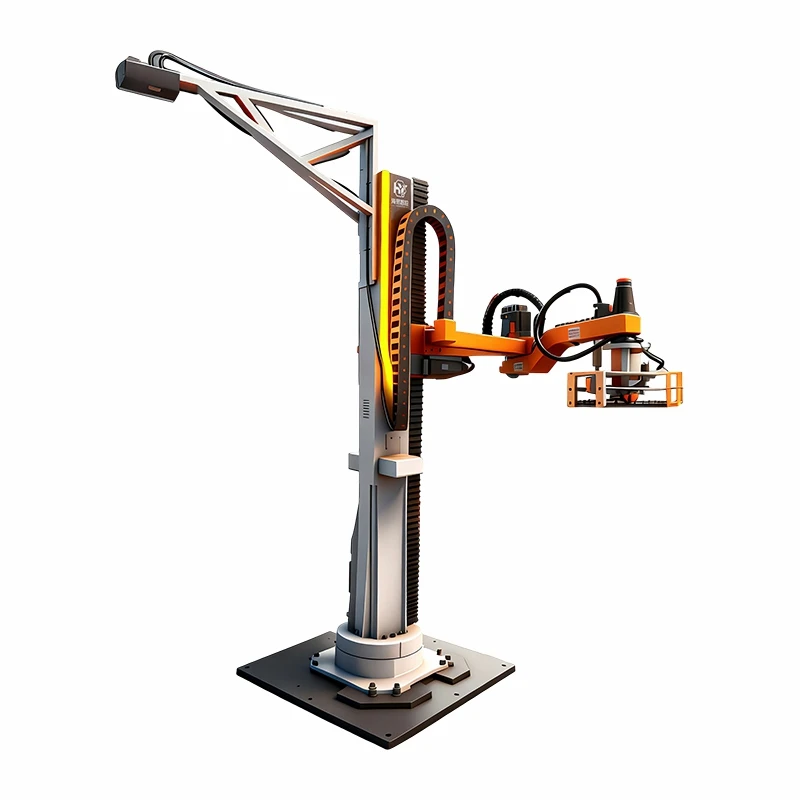
3. Workplace Constraints
The physical environment where the palletizing robotic arm operates can limit the stacking height. Ceiling height is a major constraint. If the ceiling in a warehouse is low, the robotic arm cannot stack pallets to a great height. For example, in a warehouse with a ceiling height of 4 meters, the maximum height of the pallet stack will be restricted to a value less than 4 meters, taking into account the height of the pallet itself and any safety clearances.
Floor space is another consideration. If the available floor space is limited, the robotic arm may need to stack pallets in a more compact manner, which could potentially affect the number of layers.
Typical Stacking Capacities
In general, palletizing robotic arms can stack anywhere from 3 to 10 layers, depending on the factors mentioned above.
For light - weight products and in environments with high ceilings and large pallets, robotic arms can stack up to 10 layers. For example, in a beverage factory where the products are relatively light (such as cans of soda), a well - designed palletizing robotic arm can stack up to 10 layers on a standard pallet.
On the other hand, for heavy - duty products like large machinery parts, the number of layers may be limited to 3 or 4. These products have a high weight, which requires a more stable base and restricts the stacking height to ensure the safety of the stack.
Our Palletizing Robotic Arm Solutions
As a supplier of Palletizing Robotic Arm, we offer a range of solutions to meet different stacking requirements. Our robotic arms are designed with high - precision control systems, allowing for accurate and stable stacking.
We also provide Single Column Robot options, which are suitable for smaller - scale palletizing operations. These robots are compact and can be easily integrated into existing production lines.
In addition, our Column Robot Debagging Machine is a unique offering that combines palletizing and debagging functions. This machine can efficiently handle products in bags, reducing the need for manual labor and improving overall productivity.
Optimizing Stacking Layers
To optimize the number of layers a palletizing robotic arm can stack, businesses can take several steps.
1. Product Design and Packaging
Designing products with a more regular shape and even weight distribution can improve the stability of the stack. Packaging materials can also be chosen to enhance the stackability of the products. For example, using shrink - wrap or stretch - wrap can hold the products together and prevent them from shifting during stacking.
2. Robotic Arm Programming
Advanced programming techniques can be used to optimize the stacking pattern. By carefully planning the placement of each layer, the robotic arm can create a more stable and efficient stack. For example, a chevron - style stacking pattern can provide better stability compared to a simple straight - stack pattern.
3. Warehouse Layout and Equipment
Optimizing the warehouse layout can also help increase the stacking height. Installing high - bay storage racks and using vertical space more effectively can allow for taller pallet stacks. Additionally, using equipment such as forklifts with longer masts can facilitate the handling of taller stacks.
Contact Us for Purchase and Consultation
If you are interested in our Palletizing Robotic Arm products or have any questions about the maximum number of layers they can stack, we encourage you to contact us. Our team of experts is ready to provide you with detailed information and help you find the best solution for your palletizing needs. Whether you are a small - scale business or a large industrial enterprise, we can offer customized solutions to meet your specific requirements.
References
- "Industrial Robotics: Technology, Programming, and Applications" by Peter Corke
- "Automated Material Handling Systems: Design and Optimization" by Suresh M. G. Rao