

In the rapidly evolving landscape of industrial automation, Autonomous Mobile Platforms (AMPs) have emerged as a revolutionary force, reshaping the way businesses operate. As a leading supplier of Autonomous Mobile Platforms, I am often asked about the autonomy level of these remarkable machines. In this blog post, I will delve into the concept of autonomy in the context of AMPs, exploring the different levels of autonomy, their implications, and how they can benefit your business.
Understanding Autonomy in Autonomous Mobile Platforms
Autonomy refers to the ability of a system to perform tasks without human intervention. In the case of Autonomous Mobile Platforms, autonomy is measured by the degree to which the platform can navigate, make decisions, and adapt to its environment without the need for constant human control. The higher the level of autonomy, the more independent and self-sufficient the platform becomes.
The concept of autonomy in AMPs is often described using a scale of levels, similar to the SAE (Society of Automotive Engineers) levels of driving automation. These levels range from Level 0 (no automation) to Level 5 (full automation), with each level representing a different degree of autonomy.
-
Level 0: No Automation
At this level, the Autonomous Mobile Platform has no autonomous capabilities and relies entirely on human operators for control. The platform is typically controlled by a remote operator or a fixed path system, and it cannot make any decisions on its own. -
Level 1: Driver Assistance
At Level 1, the AMP has some basic autonomous features, such as obstacle detection and avoidance. The platform can detect obstacles in its path and take evasive action to avoid collisions, but it still requires human input for navigation and decision-making. -
Level 2: Partial Automation
Level 2 AMPs have more advanced autonomous capabilities, including the ability to follow a pre-programmed path and perform simple tasks without human intervention. The platform can navigate through a known environment and make decisions based on pre-defined rules, but it still requires human supervision in case of unexpected situations. -
Level 3: Conditional Automation
At Level 3, the AMP can operate autonomously in certain conditions, such as on a pre-defined route or in a controlled environment. The platform can make decisions based on real-time data and adapt to changes in its environment, but it still requires human intervention in case of complex or unpredictable situations.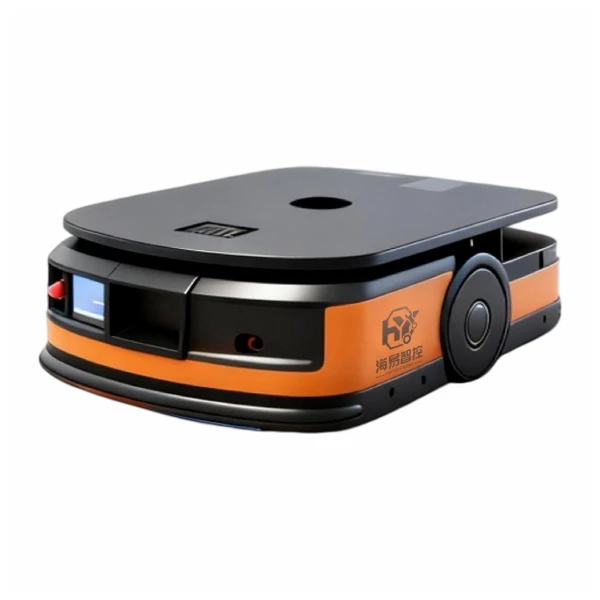

-
Level 4: High Automation
Level 4 AMPs have a high degree of autonomy and can operate without human intervention in most situations. The platform can navigate through unknown environments, make complex decisions, and adapt to changes in real-time. However, it still requires human supervision in case of extreme or unforeseen circumstances. -
Level 5: Full Automation
At the highest level of autonomy, Level 5, the AMP can operate completely autonomously in any environment without the need for human intervention. The platform can handle all aspects of navigation, decision-making, and task execution, and it can adapt to any situation that it encounters.
Implications of Different Autonomy Levels
The level of autonomy of an Autonomous Mobile Platform has significant implications for its performance, functionality, and usability. Higher levels of autonomy offer several advantages, including increased efficiency, productivity, and safety.
-
Increased Efficiency
Autonomous Mobile Platforms with higher levels of autonomy can operate more efficiently than those with lower levels of autonomy. They can navigate through complex environments, avoid obstacles, and make decisions in real-time, which reduces the time and effort required to complete tasks. This can lead to significant cost savings and increased productivity for businesses. -
Enhanced Productivity
AMPs with higher levels of autonomy can perform tasks more quickly and accurately than human operators. They can work 24/7 without breaks, which increases the overall productivity of the business. Additionally, they can handle multiple tasks simultaneously, which further enhances their efficiency and productivity. -
Improved Safety
Autonomous Mobile Platforms are designed to operate safely in a variety of environments. They are equipped with sensors and cameras that allow them to detect obstacles and avoid collisions. Additionally, they can operate in hazardous or dangerous environments, such as mines or chemical plants, without putting human operators at risk.
Benefits of Autonomous Mobile Platforms for Your Business
As a supplier of Autonomous Mobile Platforms, I have seen firsthand the benefits that these machines can offer to businesses of all sizes. Here are some of the key benefits of using AMPs in your business:
-
Cost Savings
Autonomous Mobile Platforms can help businesses save money by reducing labor costs, increasing productivity, and improving efficiency. They can also reduce the need for expensive infrastructure, such as conveyor belts and forklifts. -
Flexibility
AMPs are highly flexible and can be easily customized to meet the specific needs of your business. They can be programmed to perform a variety of tasks, such as material handling, inventory management, and order fulfillment. -
Scalability
Autonomous Mobile Platforms can be easily scaled up or down to meet the changing needs of your business. You can add or remove platforms as needed, which allows you to adapt to changes in demand and optimize your operations. -
Improved Quality
AMPs can help businesses improve the quality of their products and services by reducing errors and increasing accuracy. They can also provide real-time data and analytics, which allows you to make informed decisions and improve your processes.
Conclusion
Autonomous Mobile Platforms are a game-changer in the world of industrial automation. They offer a wide range of benefits, including increased efficiency, productivity, and safety. As a supplier of Autonomous Mobile Platforms, I am committed to providing our customers with the highest quality products and services. If you are interested in learning more about our Autonomous Mobile Platform or Mobile Autonomous Intelligent Robot, please feel free to contact us to discuss your specific needs and requirements. We look forward to working with you to help your business achieve its goals.
References
- Society of Automotive Engineers (SAE). (2021). Taxonomy and Definitions for Terms Related to Driving Automation Systems for On-Road Motor Vehicles. SAE International.
- International Federation of Robotics (IFR). (2021). World Robotics 2021 - Industrial Robots. IFR.
- McKinsey & Company. (2020). The future of work in America: People and places, today and tomorrow. McKinsey Global Institute.