

Autonomous Mobile Robot
Autonomous Mobile Robots (AMR) for Industrial Material Handling
Automate repetitive material movement across your warehouse, manufacturing plants, and distribution centers with flexible, high-efficiency logistics. Our industrial Autonomous Mobile Robots (AMRs) feature advanced SLAM navigation, fleet coordination algorithms, and safety architectures complying with international standards (ISO 3691-4 / ANSI RIA R15.08). Transport goods seamlessly without cutting floor grooves, laying magnetic tracks, or modifying facility infrastructure.
-
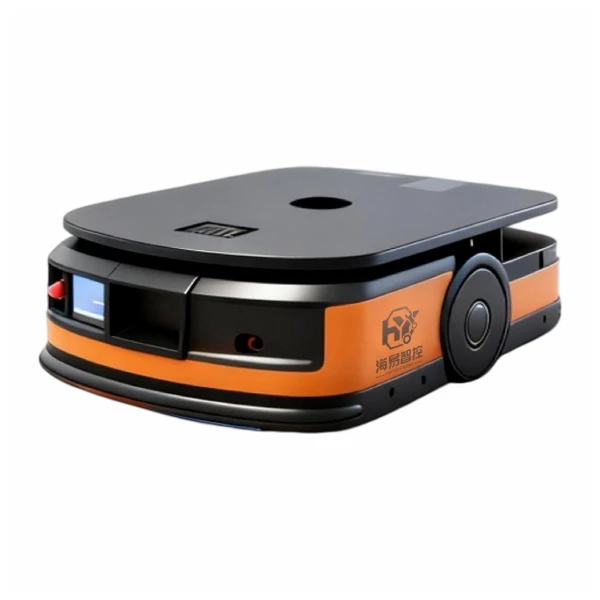
![AGV Amr Robot]() AGV Amr RobotHaiyi Intelligent Control AMR Top up Mobile Robot, as an efficient and reliable agv amr robot, provides a complete indoor logistics automation solution for modern manufacturing and warehousing...read more
AGV Amr RobotHaiyi Intelligent Control AMR Top up Mobile Robot, as an efficient and reliable agv amr robot, provides a complete indoor logistics automation solution for modern manufacturing and warehousing...read more -
![Autonomous Mobile Platform]() Autonomous Mobile PlatformDesigned for intelligent indoor material flow, Haiyi Intelligent Control AMR Top up Mobile Robot is a highly adaptable autonomous mobile platform. As a professional autonomous mobile platform for...read more
Autonomous Mobile PlatformDesigned for intelligent indoor material flow, Haiyi Intelligent Control AMR Top up Mobile Robot is a highly adaptable autonomous mobile platform. As a professional autonomous mobile platform for...read more -
![Mobile Autonomous Intelligent Robot]() Mobile Autonomous Intelligent RobotHaiyi Intelligent Control AMR Top up Mobile Robot is a new-generation mobile autonomous intelligent robot focused on indoor logistics automation. This mobile autonomous intelligent robot features...read more
Mobile Autonomous Intelligent RobotHaiyi Intelligent Control AMR Top up Mobile Robot is a new-generation mobile autonomous intelligent robot focused on indoor logistics automation. This mobile autonomous intelligent robot features...read more


Core Operational Benefits
Zero Infrastructure Modification
Deploy without cutting floor grooves or installing magnetic tape. Simply scan the facility to generate a dynamic map.
12 to 18 Months Payback Period
Reduce labor dependency, lower operational overhead, and minimize risks of manual forklift collisions and workplace injuries.
24/7 Continuous Operation
Integrated opportunity charging and dynamic fleet management ensure uninterrupted multi-shift material movement.
Full Software Integration
Native API, OPC UA, and RESTful connections enable seamless data exchange with existing WMS, MES, and ERP systems.
AMR Platform Range & Selection
|
AMR Series |
Payload Range |
Typical Applications |
Recommended Navigation |
Key Selection Factors |
|
Compact / Low-Payload AMR Series |
100–300 kg |
Small parts, totes, PCB racks, laboratory samples, light components |
Laser SLAM / Natural Feature Navigation |
Compact chassis, tight turning radius, high maneuverability |
|
Medium-Payload AMR Series |
500–1,000 kg |
Line-side material delivery, Work-In-Process (WIP) transport, container moving |
Hybrid Navigation (Laser SLAM + QR Code Positioning) |
Cycle efficiency, fast docking speed, battery operating time |
|
Heavy-Duty / Pallet AMR Series |
1,500–3,000 kg |
Standard Euro/GMA pallets, heavy castings, raw materials, finished goods |
Heavy LiDAR SLAM + 3D Obstacle Avoidance Camera |
Structural chassis rigidity, ramp slope capability, threshold clearance |
|
Lift & Transfer AMR Series |
500–1,500 kg |
Automated floor-level pallet pickup, rack lifting, cart towing |
Reflector / SLAM + Pallet Pose Perception |
Lift stroke length, pallet positioning tolerance, load overhang clearance |
|
Conveyor-Top AMR Series |
200–1,000 kg |
Machine-to-machine (M2M) automated transfer, production line connection |
Laser SLAM + Optical Sensor Docking |
Transfer accuracy (±2 mm), hardware PLC signal handshake |
Industrial Safety Architecture & International Compliance
In shared human-robot environments, functional safety is non-negotiable. Our AMR architecture incorporates dual-channel safety controls to ensure fully compliant operation.
-
360° Safety LiDAR Scanners
Dynamic multi-zone field configuration adjusts deceleration and stop boundaries in real time based on vehicle travel speed.
-
3D Obstacle Detection Cameras
Identifies obstacles outside horizontal LiDAR planes, such as low-profile forklift tines and overhanging structures.
-
Functional Safety Controllers
Built with PLd / SIL2 safety controllers, physical emergency-stop buttons, safety-rated speed monitoring, and optical status indicators.
-
International Regulatory Compliance
Engineered to comply with European CE directives (Machine Directive 2006/42/EC, EMC Directive 2014/30/EU), ISO 3691-4, and North American ANSI/RIA R15.08 standards.
System Integration: WMS, MES & Fleet Management
A single mobile robot cannot maximize ROI without centralized coordination. Our Fleet Management System (FMS) coordinates multi-robot traffic routing, optimizes dispatch tasks, manages auto-charging cycles, and communicates with your enterprise software.
WMS / ERP Integration
Connect via REST API, WebSockets, MQTT, or database connectors to exchange mission orders, inventory updates, and drop-off logs.
MES / WCS Integration
Native support for OPC UA, Modbus TCP, and Industrial Ethernet to process line-side call buttons, material requests, and production takt-time synchronization.
Facility Hardware Handshaking
Direct communication with automatic doors, elevators, rapid-roll gates, and motorized conveyors via dry contacts, I/O modules, or wireless PLC signals.
AMR vs. AGV vs. Manual Forklifts: Technical Selection
|
Comparison Factor |
Manual Forklifts |
Traditional AGVs |
Autonomous Mobile Robots (AMRs) |
|
Routing Flexibility |
High — dependent on operator judgment |
Low — typically restricted to fixed magnetic paths or QR grids |
High — dynamic autonomous route planning |
|
Facility Infrastructure Setup |
None required |
High — may require floor modifications, guide paths, tape, or fixed markers |
Minimal — routes can be configured through software-based mapping |
|
Dynamic Obstacle Response |
Operator dependent |
Limited — typically stops when the predefined path is blocked |
Autonomous obstacle detection, avoidance, and route replanning |
|
Fleet Scalability |
Requires additional drivers and equipment |
More complex — expansion may require re-engineering fixed routes |
Flexible — additional robots can be managed through fleet software |
|
Best-Fit Applications |
Irregular material handling, high-rack stacking, operator-dependent tasks |
Fixed, repetitive, high-volume transport routes |
Agile manufacturing, dynamic warehouses, and multi-product workflows |
Deployment Workflow: From Material Flow Audit to Site Acceptance
Material Flow Analysis
Evaluating payload dimensions, transport frequency, available aisle width, floor gradient, and peak throughput requirements.
01
Layout Mapping & Simulation
Generating 2D/3D facility maps, configuring virtual keep-out zones, speed limits, and one-way traffic rules.
02
Top-Module Engineering
Customizing conveyors, lifters, or towing pins to match existing station height and load standards.
03
Fleet & Software Integration
Interfacing the Fleet Controller with local WMS/MES systems and validating PLC signal handshakes.
04
Site Acceptance Testing (SAT)
Validating safety stop functions, positioning accuracy (±2mm to ±10mm), slope navigation, and automatic docking.
05
FAQ
Request an AMR Layout Proposal & Budget Estimation
To help our engineering team provide a precise AMR configuration and ROI evaluation, please provide the following initial project details:
Load Specifications
Minimum and maximum payload weight, dimensions (L × W × H), carrier type (pallet, tote, rack, fixture).
Route & Throughput
Average mission distance, required missions per hour/shift, operational shifts per day.
Facility Conditions
Floor material, ramp slopes (%), minimum available aisle width, elevator or automatic door integration needs.
Software Preferences
Existing WMS/MES/ERP brand and preferred communication protocols.
Haiyi Intelligent Control Robotics (Hangzhou) Co., Ltd. is one of the most reliable autonomous mobile robot manufacturers and suppliers in China. With abundant experience, we warmly welcome you to buy CE approved autonomous mobile robot from our factory. If you have any enquiry about quotation, please feel free to email us.
AGV Amr Robot, autonomous robots in manufacturing, mobile robots in industry