

Hey there! As a supplier of Single Column Robots, I often get asked if these robots can be used in hazardous environments. Well, let's dive right into this topic and see if our Single Column Robot is up for the challenge.
Understanding Hazardous Environments
First off, we need to know what we mean by "hazardous environments." These can be places where there are extreme temperatures, high levels of dust, chemicals, or even explosive atmospheres. For example, a chemical plant might have corrosive substances in the air, while a mining site could be full of dust and debris.
Features of Single Column Robots
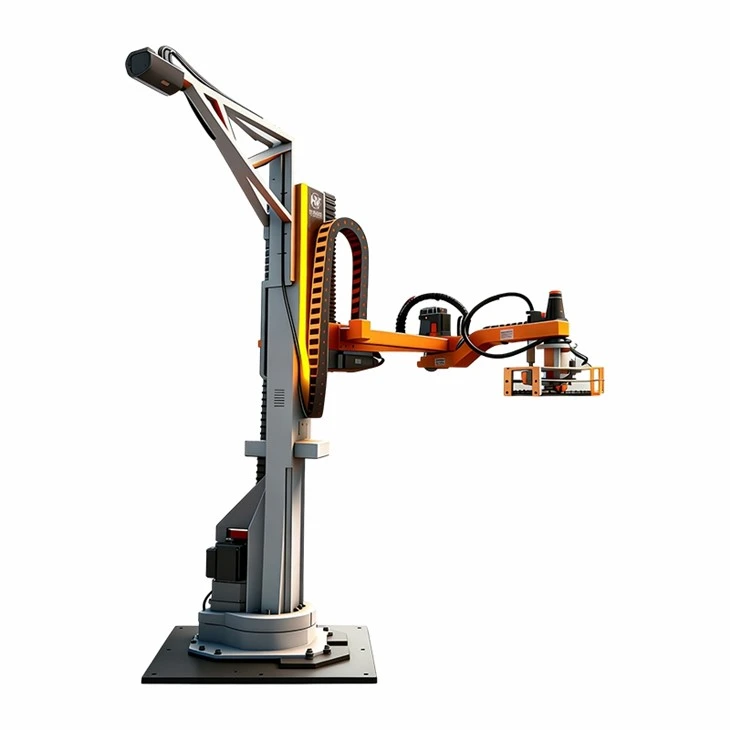
Our Single Column Robots are designed with some pretty cool features that make them potentially suitable for hazardous settings. They are built with a strong and durable single - column structure. This design not only provides stability but also allows for a large working range.
The robot's joints are engineered to be highly precise. This precision is crucial in a hazardous environment where any small mistake could lead to big problems. For instance, in a chemical factory, if the robot is handling dangerous chemicals, it needs to place them exactly where they should go to avoid spills.
Adaptability to Hazardous Conditions
One of the key aspects is the robot's ability to adapt to different conditions. We can customize the Single Column Robot to withstand extreme temperatures. If it's going to be used in a hot environment, like a foundry, we can use heat - resistant materials in its construction. On the other hand, for cold environments, such as a freezer storage facility, we can make sure the robot's components can operate properly at low temperatures.
When it comes to dust and debris, the robot can be equipped with protective covers. These covers prevent dust from getting into the robot's internal components, which could otherwise cause malfunctions. In a dusty mining environment, for example, these covers would be a must - have.
Safety in Hazardous Environments
Safety is a top priority, especially in hazardous environments. Our Single Column Robots come with multiple safety features. They have sensors that can detect obstacles in their path. If there's something in the way, the robot will stop immediately to avoid collisions.
In an explosive atmosphere, we can use explosion - proof components. These components are designed to prevent any sparks that could potentially cause an explosion. This is crucial in industries like oil and gas, where the risk of explosion is high.
Case Studies
Let's look at some real - world examples. In a food processing plant, there are strict hygiene requirements. Our Single Column Robot Palletizer has been used to handle food products. The robot is made of materials that are easy to clean and sanitize, which helps maintain a safe and hygienic environment.
In a pharmaceutical factory, where precision and sterility are key, the Single Column Robot has been able to perform tasks like sorting and packaging with high accuracy. It can work in a controlled environment, ensuring that the products are not contaminated.

Limitations
Of course, no robot is perfect. There are some limitations when using a Single Column Robot in a hazardous environment. For example, in an environment with extremely high levels of radiation, the robot's electronic components might be affected. The radiation could damage the sensors and other parts, leading to malfunctions.
Also, in a very corrosive environment, even with protective coatings, the robot might eventually start to corrode over time. Regular maintenance and replacement of parts would be necessary to keep the robot functioning properly.
Cost - Benefit Analysis
When considering using a Single Column Robot in a hazardous environment, it's important to do a cost - benefit analysis. The initial cost of purchasing and customizing the robot might be high. However, in the long run, it can save a lot of money. For example, it can reduce the risk of human injury in a dangerous environment. Workers don't have to be exposed to the hazards, and the robot can work continuously without getting tired.
Comparison with Other Robots
There are other types of robots available for use in hazardous environments, such as multi - column robots or mobile robots. While multi - column robots might offer more stability in some cases, our Single Column Robot has the advantage of a smaller footprint. This means it can be installed in smaller spaces, which is often a requirement in many industrial settings.
Mobile robots can move around freely, but they might not be as precise as our Single Column Robot. The Single Column Robot is fixed in one place, which allows it to perform tasks with high accuracy.
Future Developments
We're constantly working on improving our Single Column Robots for use in hazardous environments. We're researching new materials that are more resistant to corrosion and radiation. We're also looking into ways to make the robots more energy - efficient, which is important in any industrial setting.
Conclusion
So, can a Single Column Robot be used in a hazardous environment? The answer is yes, with some considerations. Our robots have many features that make them suitable for such environments, but there are also limitations. If you're in an industry that requires a robot to work in a hazardous setting, our Column Robot Palletizer and Single Column Robots could be a great option.
If you're interested in learning more about how our Single Column Robots can meet your needs in a hazardous environment, don't hesitate to reach out. We're here to help you find the best solution for your business. Let's have a chat and see how we can work together to make your operations safer and more efficient.
References
- Industrial Robotics Handbook, 3rd Edition
- Safety Standards for Robots in Hazardous Environments, International Organization for Standardization
- Case Studies in Industrial Robot Applications in Hazardous Settings, Journal of Industrial Robotics Research