

With the development of robot control technology, addressing the shortcomings of closed-structure robot controllers, developing "modular and standardized robot controllers with open structures" is a current development direction for robot controllers. In recent years, Japan, the United States, and some European countries have been developing robot controllers with open structures. For example, Yaskawa Electric Corporation of Japan has developed a robot controller with an open structure and network functions based on a PC. my country's 863 Program's intelligent robot theme has also initiated research in this area.
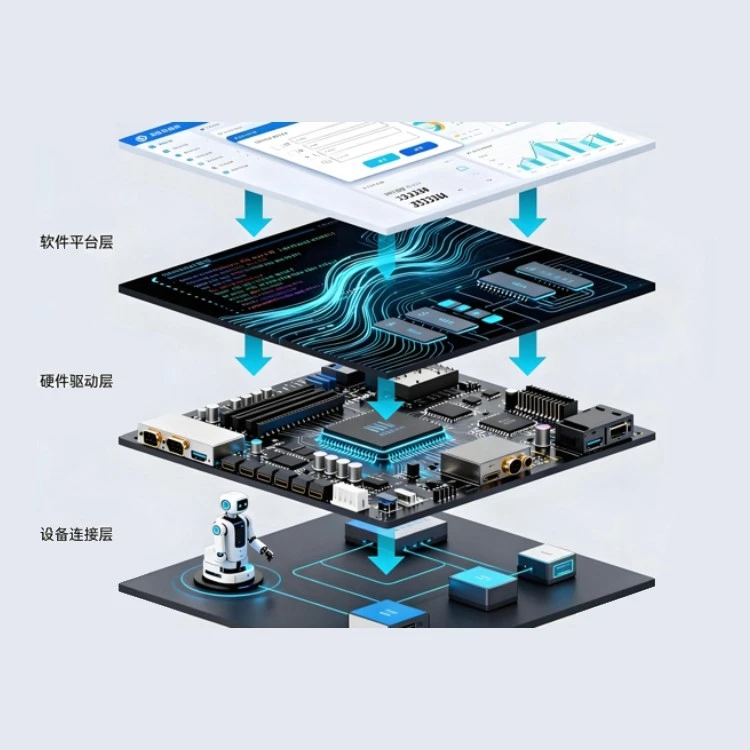
An open-structure robot controller refers to a controller whose various levels of design are open to the user, allowing the user to easily expand and improve its performance. Its main ideas are:
(1) Utilizing a development system based on a non-closed computer platform to effectively utilize the software and hardware resources of the standard computer platform to create conditions for controller expansion.
(2) Utilizing a standard operating system and control language to change the situation where various dedicated robot languages coexist and are incompatible.
(3) Adopting a standard bus structure to easily integrate the hardware necessary for expanding controller performance, such as various sensors, I/O boards, and motion control boards, into the original system.
(4) Utilize network communication to achieve resource sharing or remote communication. Currently, almost all controllers lack network functionality. Utilizing network communication can improve the flexibility of system changes. We can design a robot controller with an open structure based on the above ideas, and the design process should be as modular as possible. Modularization is a modern method of system design and construction. Designed using the modular method, the system consists of multiple functional modules, each complete and singular. The system built in this way not only has good performance and a short development cycle but also lower cost. Modularization also makes the system open, easy to modify, refactor, and add configuration functions.