

If you’ve ever walked through a busy warehouse at 2 a.m., watching pallets glide silently from a loading dock to a storage rack without a human driver behind the wheel, you’ve probably encountered an AGV lift truck. As a supplier of these autonomous workhorses, one of the most common questions I get from new customers is this: What is the payload capacity of an AGV lift truck? It’s not a one-size-fits-all answer, and getting it right is the difference between a system that streamlines your operations and one that causes costly delays, damaged goods, or safety risks. Let’s break down what determines payload capacity, how to match it to your specific needs, and why partnering with a trusted supplier like ours matters.
First, let’s get clear on what an AGV lift truck is, for anyone who’s still new to the technology. Unlike traditional forklifts that require an operator, AGV (Automated Guided Vehicle) lift trucks navigate using a mix of sensors, mapping software, and sometimes magnetic tape or QR codes, working 24/7 without breaks, shifts, or fatigue. They come in a range of types: from compact pallet jacks that move single cases to heavy-duty units that can stack full pallets 30 feet high. The core component that enables this lifting is the AGV Fork, a specialized attachment designed for precision, durability, and consistency, even when working autonomously. Before we dive into payload specifics, it’s important to note that payload capacity isn’t just a number on a spec sheet—it’s a dynamic metric that depends on several factors unique to your facility.
So, what’s the average payload range for standard AGV lift trucks? For most light to medium-duty applications, like e-commerce order fulfillment, retail distribution, or small manufacturing warehouses, you’ll see capacities between 1,000 pounds (450 kg) and 5,000 pounds (2,268 kg). These are the workhorses that most new customers start with, perfect for moving palletized goods, raw materials, or finished products that fall within that weight bracket. But if you’re in heavy manufacturing, automotive parts storage, or bulk material handling, you’ll need a higher capacity. Our heavy-duty AGV lift trucks, for example, can handle payloads up to 10,000 pounds (4,536 kg) and beyond, with custom configurations for even heavier loads if needed.
Wait, but why is there such a big gap between 1,000 and 10,000 pounds? It boils down to design, and this is where not all AGV lift trucks are created equal. A light-duty AGV pallet jack uses a smaller chassis, lighter lifting mechanism, and smaller wheels, all optimized for maneuverability in tight aisles (as narrow as 6 feet, in some cases). Cut weight back too much, though, and you risk tipping when lifting a heavy load, especially at height. That’s a key point many first-time buyers miss: payload capacity isn’t just about how much weight the fork can hold—it’s about the stability of the entire vehicle when the load is elevated. That’s where the importance of choosing the right AGV Fork comes in. A heavy-duty fork designed for 10,000 pounds is built with thicker steel, reinforced joints, and precision alignment to distribute weight evenly across the truck’s chassis, preventing tipping, bending, or misalignment when lifting.
Another factor that impacts AGV lift truck payload capacity is guidance technology. There are a few different systems on the market, and some are better suited for heavy loads than others. For example, Laser Guided Forklift technology uses a rotating laser that bounces off reflective targets placed around your facility to navigate, offering high accuracy and the ability to travel longer distances at faster speeds. This makes it ideal for heavy loads, because the guidance system can adjust for uneven warehouse floors and sudden changes in path, keeping a 10,000-pound load stable. Other older guidance methods, like magnetic tape, work well for lighter loads and fixed paths, but can struggle with heavy payloads on uneven surfaces, as they don’t have the same real-time adjustment capabilities.
Now, let’s talk about how to calculate the right payload capacity for your operation. This isn’t just about looking at the heaviest pallet you move and matching that number. You need to account for a few other variables: the weight of the pallet itself (some pallets can weigh 50 pounds or more, and heavy-duty wooden pallets for bulk goods can hit 100 pounds), the height you’re lifting the load (many AGV lift trucks have lower payload capacities when lifting to higher rack levels, because the higher center of gravity increases tipping risk), and the frequency of your operations. If you’re moving 500 pallets a day that average 3,500 pounds each, a 5,000-pound capacity truck might be tight, especially when you add the weight of the pallet. But if you only occasionally move a 4,000-pound load, a 5,000-pound truck could work, while a 10,000-pound unit would be overkill and more expensive to operate.
As a supplier, we always start by asking customers these questions before recommending a system, because making the wrong choice leads to avoidable costs. For example, last year we worked with a small food distribution company that initially thought they needed a 5,000-pound AGV lift truck to move 4,200-pound pallets of canned goods. When we asked about their pallet weight and lifting height, we learned their pallets were 80 pounds each, and they only lifted pallets to 8 feet high, not the maximum 15 feet the 5,000-pound truck was rated for. That meant they had 720 pounds of extra capacity they’d never use, and their operational costs would have been 20% higher than needed. Instead, we recommended a 4,500-pound AGV lift truck, which was perfect for their needs, saved them money on upfront costs and energy, and still had enough capacity for occasional heavier pallets that came in.
Another common mistake customers make is confusing static payload capacity with dynamic payload capacity. Static capacity is the number you see on most spec sheets: how much the truck can hold when it’s parked on a flat, level surface, not moving, not lifting. Dynamic capacity is the real-world number: how much the truck can hold while moving, turning, lifting, or navigating a slightly uneven floor. This is almost always lower than static capacity, and it’s especially important to consider if your warehouse has sloped floors, narrow aisles, or frequent stops and starts. A good AGV lift truck will have dynamic capacity listed alongside static capacity, and a reliable supplier will help you account for these real-world conditions when choosing a system.
Now, let’s address what happens if you exceed the payload capacity of your AGV lift truck. First, safety is the biggest risk. AGV lift trucks are built with load sensors that will often automatically stop or not lift a load that’s too heavy, but that doesn’t mean you should test them. Exceeding payload capacity can cause forks to bend, the chassis to warp, or the truck to tip, which can injure workers, damage expensive goods, and even destroy the vehicle itself. We’ve seen customers try to squeeze an extra 500 pounds onto a 5,000-pound truck, and end up with a bent fork that cost $1,200 to replace, plus a week of downtime while the part was ordered. That’s a far bigger cost than just choosing the right capacity truck in the first place.
On the flip side, choosing a higher capacity than you need isn’t just a waste of money. It can also lead to slower operations, because heavy-duty trucks are often less maneuverable in tight spaces. If your warehouse has narrow aisles, a wide 10,000-pound AGV lift truck might not fit, forcing you to adjust your layout, which is another costly project. That’s why our team works with customers to balance their current needs with future growth. If you’re planning to expand your product line or start handling heavier goods in the next two years, we can recommend a system that has extra capacity built in, without making you pay for features you don’t need right now.
When you’re shopping for AGV lift trucks, it’s important to work with a supplier that doesn’t just sell you a one-size-fits-all unit. We don’t just push our standard models—we look at your facility layout, the types of goods you move, your peak operations times, and even your long-term goals to recommend the right system. For example, if you’re in a automotive parts plant where you need to move 8,000-pound loads of engine blocks, our heavy-duty AGV lift trucks with Laser Guided Forklift technology are designed to handle that safely and efficiently. If you’re a small e-commerce business with a tight warehouse and a mix of light and medium loads, our compact AGV lift trucks with 1,500 to 3,000 pound capacities are the perfect fit.
Another key point: payload capacity for AGV lift trucks isn’t just about the truck itself, it’s about the accessories you pair with it. The AGV Fork is a critical part of this. A fork designed for light loads will flex under heavy weight, reducing the truck’s effective capacity, while a heavy-duty fork will distribute weight evenly, letting the truck reach its full rated capacity. We offer a range of AGV Forks, from standard pallet forks to specialized forks for long loads, barrels, or even double pallets, so you can customize your system to match exactly what you need.
If you’re still not sure what payload capacity is right for your operation, the best step is to reach out to a trusted supplier and start a conversation. Don’t rely on online calculators or spec sheet numbers alone—give them the details of your daily operations, and a good team will help you work through the variables. As someone who’s been in this industry for over a decade, I’ve seen first-hand how the right AGV lift truck can turn a chaotic warehouse into a smoothly running operation, and how the wrong one can create headaches that last for years. Whether you’re looking for your first AGV system or upgrading an existing fleet, taking the time to get the payload capacity right is one of the most important decisions you’ll make.
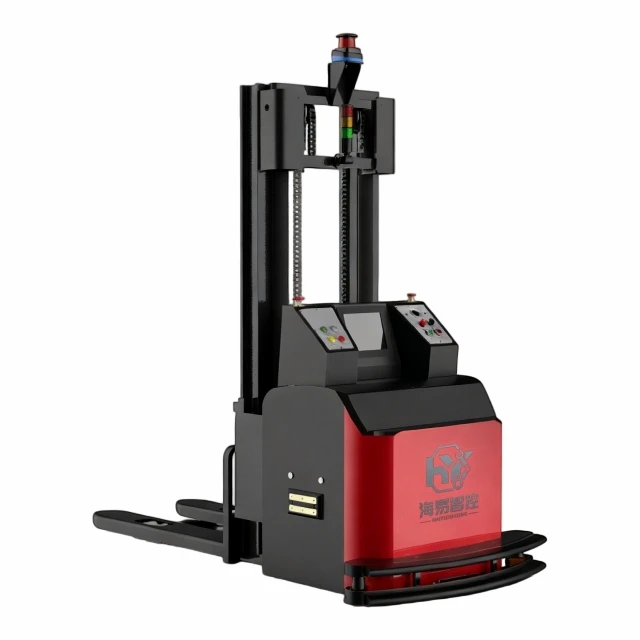

At the end of the day, the payload capacity of an AGV lift truck isn’t just a technical specification—it’s a tool to help you work smarter, not harder. It’s about making sure your autonomous vehicles can keep up with your demand, without sacrificing safety, efficiency, or reliability. When you partner with a supplier who understands your business, you can avoid the common mistakes that lead to overpaying, underperforming, or costly downtime. If you’re ready to learn more about our AGV lift trucks, our AGV Forks, or our Laser Guided Forklift systems, we’re here to help you find the perfect solution for your operations. Reach out to our team today to start the conversation about how autonomous material handling can transform your warehouse.
References
- Material Handling Industry Association. (2022). AGV Design and Operational Guidelines. MHIA Publications.
- Robotics Industries Association. (2023). Autonomous Guided Vehicle Payload Capacity: Best Practices for Warehousing Applications. RIA Technical Report.
- Global AGV Market Analysis. (2024). Capacity Segmentation and Industry Use Cases. Grand View Research.
- American National Standards Institute. (2021). Safety Standards for Automatic Guided Industrial Vehicles. ANSI/ITSDF B56.5.